• Stockists
  • Contact Us
  • Company
  • Home
      • Pest
      • Cleaning
      • Garden
  • Pest Problem Solver
  • Products
  • Pests
  • Pest Advice
close
Go to product page
Pest Guy

Pest Problem
Solver

These products deal with white tail spider

No bugs Borafume 20g2 NO BUGS BORAFUME /assets/Uploads/Packshots/_resampled/SetWidth120-No-bugs-Borafume-20g2.png

Benefits

  • Kills all insects present at time of activation.
  • Quick knock down & easy to use.
  • Excellent for use in hard to reach areas.
  • 20g fumigator treats up to 200m3, 100g fumigator treats up to 1000m3.
  • Dry clean up & does not stain.
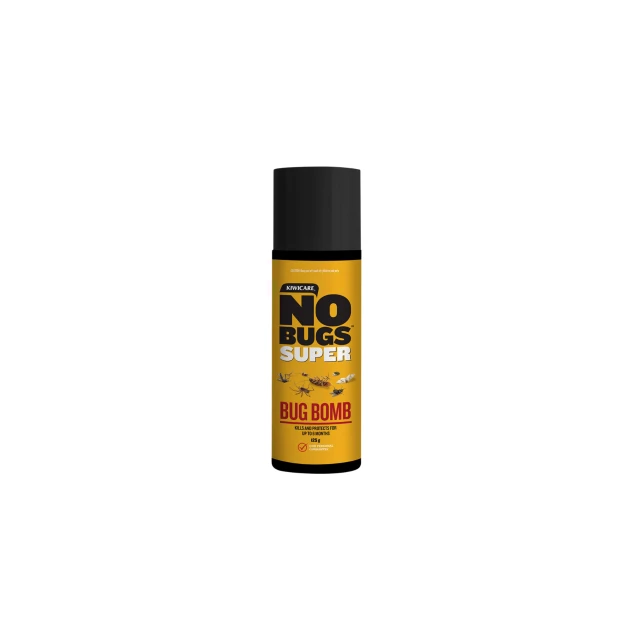
NoBugsBomb NO BUGS BUG BOMB /assets/Uploads/Packshots/_resampled/SetWidth120-NoBugsBomb.png

Benefits

  • Kills all insects present at time of activation.
  • Quick knock down & easy to use.
  • Excellent for hard to reach areas.
  • Does not stain.
  • Effective up to 150m3 per can.
NBI RTU Custom NO BUGS INDOOR /assets/Uploads/Packshots/_resampled/SetWidth120-NBI-RTU-Custom.png

Benefits

  • One appliciation lasts up to 3 months.
  • Controls 99% of insect pests.
  • Sprayed surfaces are safe for people and pets once dry.
  • Made with natural pyrethrum.
  • Odourless and will not stain.
No BugsSuper 250ml NO BUGS SUPER /assets/Uploads/Packshots/_resampled/SetWidth120-No-BugsSuper-250ml.png

Benefits

  • Professional strength, long lasting insect control.
  • Kills 99.9% common insect pests.
  • One spray protects surfaces for up to 4 months outdoors and 6 months indoors.
  • Sprayed surfaces are safe to children & pets.
250ml NoSpidersConc NO SPIDERS /assets/Uploads/Packshots/_resampled/SetWidth120-250ml-NoSpidersConc.png

Benefits

  • Surface spray to effectively control spiders.
  • One spray gives up to 3 months interior protection.
  • For use indoors and outdoors.
  • No stain, no smell.
  • Sprayed surfaces are safe for children and pets once dry.

Whitetail

Kiwicare Pest » Pests » Q – Z » white tail spider

white tail spider

White tail spiders have been implicated in cases of ulceration or necrosis following spider bites. It is not clear whether white tail bites do cause ulcers but they do cause painful bites.


How to About Tips Related articles Gallery

HOW TO CONTROL WHITE TAIL SPIDERS

To get rid of white tail spiders follow these steps:

  1. Roof voids and similar dark dry places are often where these spiders lurk and build their nests. Spray the roof voids with residual insecticide; NO BUGS SUPER or NO SPIDERS, both available in a concentrate or a ready to use trigger spray or use a NO BUGS BUG BOMB or BORAFUME fumigator if the voids are hard to access.
  2. Spray interior areas with NO BUGS INDOOR, NO BUGS SUPER or NO SPIDERS where spiders have been seen and corners of ceilings, around doors and window frames, skirting, under and behind furniture, in clothes cupboards and hot tank cupboards.
  3. Spray exterior areas with NO BUGS SUPER or NO SPIDERS where webbing has accumulated (do not remove webbing until one week after spraying). Spray eaves, around windows and doors, vents, downpipes, wall bases, washing lines and decks. This acts as both a barrier to white tails and removes other spiders that would attract white tails to feed on them.


About

Variously known as White Tail spider, Whitetail spider, White-tail spider,  Whitetailed spider, White Tailed spider etc.; this Australian invader was first recorded in New Zealand in 1886, at Waiwera, Auckland. It is believed that it came into the country with early colonists and is now well established throughout the North Island and is prevalent in many parts of the South Island including Nelson and Christchurch. They are common in urban dwellings.

White Tails are active hunters, preying upon other types of spiders, and may be found roaming inside houses, especially in warmer weather. White Tail spiders have been implicated in cases of ulceration or necrosis following spider bites. The incidence of ulceration following White Tail spider bite is not known. The majority of cases appear not to develop ongoing ulceration, although blisters and redness are common.

How do I know a white tailed spider when I see one?

White Tail Spiders are slender looking, 1-2 cm in length, typically grayish or sometimes brownish in colour with orange to brown banded legs and usually with a distinct cream-white marking on the tip of the tail. Males and juveniles may have additional white markings; two spots on either side of the abdomen.

The leg span of a fully grown specimen is about the size of a fifty-cent coin. The two species present in New Zealand: Lampona cylindrata and Lampona murina cannot easily be distinguished from one another without close examination under a microscope.

Where are they found?

The White Tail spider’s preferred habitat is under dry bark and plants, but they will often be found inside houses, where they look for shelter from the light after hunting at night. They are also known to move indoors in the winter to seek shelter from the cold and there they find plenty of their favourite prey; grey house spiders.

The White Tail spider often hides in clothing and shoes, especially if they have been left lying on the floor. As White Tails eat many other kinds of spiders one sign that White Tail spiders are sharing your house is that there are few cobwebs and there are no other spiders to be found.

The nests of White Tail spiders are tangled masses of webbing. These are often found in dark dry areas such as roof voids.


Did you know?


Hunting Characteristics

These spiders do not build a web to catch their prey as they are active hunters. They are rather unusual in that they specialise in catching other spiders, particularly the common grey house spider.

The White Tail spider will cautiously enter the web of its intended victim and mimic the struggles of a trapped insect by plucking at the web. This may trick the resident spider into investigating the disturbance and so instead of gaining a meal, it becomes one when the White Tail strikes.

Signs of a White Tail Spider Bite

There are numerous accounts of particularly nasty bites that are allegedly caused by White Tail spiders. However, the evidence that these spiders are responsible for these particularly nasty bites is weak in many cases.

Where these spiders are positively identified as causing a bite, the bite will cause instant pain followed by typical symptoms including ongoing pain, discomfort and swelling at the bite site. The bite can develop into a small ulcerous wound which can look similar to a boil. It normally heals within a week. In some instances, victims report flu-like symptoms. Particularly nasty infections can leave scarring. Only a few bite victims will have a truly nasty reaction to a White Tail spider bite. Infection of the bite area seems to be a far more likely cause of medical problems than the spider's venom.

If a nasty reaction to the bite does occur, symptoms may include nausea, vomiting, dizziness, lethargy and headaches. An icepack should be applied to the area to stop the swelling. White Tail spiders will only bite if provoked and in most cases the bite will cause little harm. However, as with bee/wasp stings different people will react to a bite in different ways.

In any case, spider bites should always be cleaned and watched for signs of infection. Should any adverse symptoms occur always seek medical advice.

  • Bug, Insect, Spider?
  • Mixing and Diluting Spray Concentrates
  • Spider Bites
  • NO Bugs
  • Have a Bug Free Summer with NO Bugs Super
  • Other Risks from Bugs
  • Integrated Pest Management
  • Stop Crawling Insect and Spider Pests
  • How to Avoid Stings and Bites

Tips

There is much discussion about the danger of White Tail spider bites. Many people are convinced that the cause of their serious ulceration was the bite of a White Tail, but there is little hard scientific evidence either way. Perhaps it is better to be safe than sorry?

Gallery

Adult whitetail spider. Note cylindrical pale tiped abdomen, orange legs and size of $1 coin White-tail spider

About Kiwicare

We are Kiwis providing expert local solutions that keep your place pest free and your garden healthy.

Garden

Garden home Garden Problem Solver Products Pests Diseases Weeds Garden Health Organics

Outdoor Cleaning

Outdoor Cleaning home Products Problem Solver Grime Mark or Growth Surfaces

Company

About News Products Vacancies Useful Links Contact
Proudly made in NZ

© 2011 Kiwicare