• Stockists
  • Contact Us
  • Company
  • Home
      • Pest
      • Garden
  • Pest Problem Solver
  • Products
  • Pests
  • Pest Advice
close
Go to product page
Pest Guy

Pest Problem
Solver

These products deal with flies

Bin Fresh Outdoors Custom BIN FRESH /assets/Uploads/Packshots/_resampled/SetWidth120-Bin-Fresh-Outdoors-Custom.jpg

Benefits

  • Controls flies & wasps in outdoor bins.
  • Great fresh fragrance.
  • 2 easy to use pads and each lasts upto 2 weeks.
  • Still works if wet.
No bugs Borafume 20g2 NO BUGS BORAFUME /assets/Uploads/Packshots/_resampled/SetWidth120-No-bugs-Borafume-20g2.png

Benefits

  • Kills all insects present at time of activation.
  • Quick knock down & easy to use.
  • Excellent for use in hard to reach areas.
  • 20g fumigator treats up to 200m3, 100g fumigator treats up to 1000m3.
  • Dry clean up & does not stain.
NoBugsBomb NO BUGS BUG BOMB /assets/Uploads/Packshots/_resampled/SetWidth120-NoBugsBomb.png

Benefits

  • Kills all insects present at time of activation.
  • Quick knock down & easy to use.
  • Excellent for hard to reach areas.
  • Does not stain.
  • Effective up to 150m3 per can.
NBI RTU Custom NO BUGS INDOOR /assets/Uploads/Packshots/_resampled/SetWidth120-NBI-RTU-Custom.png

Benefits

  • One appliciation lasts up to 3 months.
  • Controls 99% of insect pests.
  • Sprayed surfaces are safe for people and pets once dry.
  • Made with natural pyrethrum.
  • Odourless and will not stain.
No BugsSuper 250ml NO BUGS SUPER /assets/Uploads/Packshots/_resampled/SetWidth120-No-BugsSuper-250ml.png

Benefits

  • Professional strength, long lasting insect control.
  • Kills 99.9% common insect pests.
  • One spray protects surfaces for up to 4 months outdoors and 6 months indoors.
  • Sprayed surfaces are safe to children & pets.
250ml NoFliesConc NO FLIES /assets/Uploads/Packshots/_resampled/SetWidth120-250ml-NoFliesConc.png

Benefits

  • Kills flies that land on sprayed surface for up to 3 months.
  • For use indoors & outdoors.
  • No harmful chemicals in the air to breath in.
  • No stain, no smell.
  • Sprayed surfaces are safe for children & pets.
Fly Bait 250ml NO FLIES BAIT /assets/Uploads/Packshots/_resampled/SetWidth120-Fly-Bait-250ml.png

Benefits

  • New formulation fly control.
  • Quick knockdown.
  • Highly attractive to a wide range of fly species.
  • Can be used in granular form or dissolved and used painted on surfaces.

Housefly

Kiwicare Pest » Pests » A – G » flies

flies

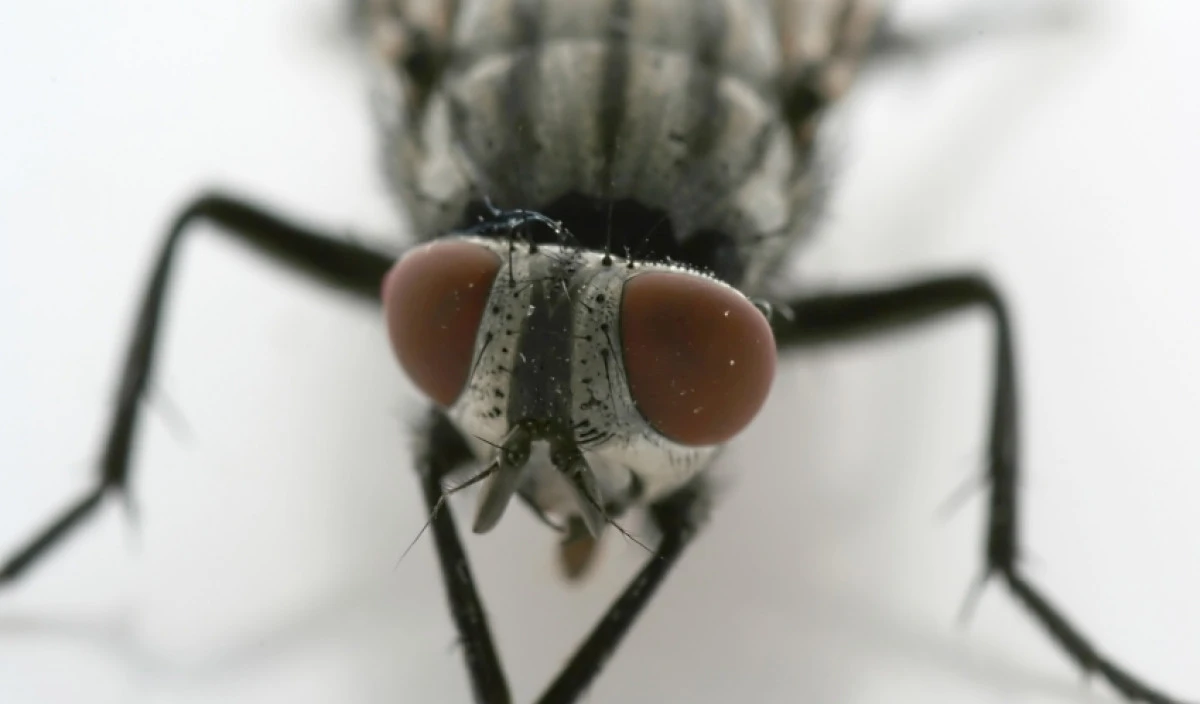
Most flies pose a threat to hygiene and are a nuisance to humans and animals. Blow flies, house flies, fruit flies and other species of flying insects are major pests of homes, farms, shops, factories and other urban and rural places of human habitation.


How to About Tips Related articles Gallery

HOW TO CONTROL FLIES

To get rid of flies follow these steps:

  1. Clear - Search for and remove fly breeding sites, fly food sources and dead flies. Clear drains, check compost heaps and bins for maggots, and use NO FLIES BAIT in areas outside where flies congregate. Breeding sites such as compost heaps can be sprayed with NO FLIES, NO BUGS INDOOR or NO BUGS SUPER to kill eggs and maggots. To kill flies in rubbish bins and keep them smelling fresh use BINFRESH OUTDOORS.
  2. Barriers - Reduce the risk of flies gaining entry to your home. Where possible keep doors and windows closed.
  3. Clean - Remove or cover food that might be attracting flies.
  4. Prevent - Treat internal and external surfaces where flies land with NO FLIES, NO BUGS INDOOR or NO BUGS SUPER long lasting surface sprays.

About

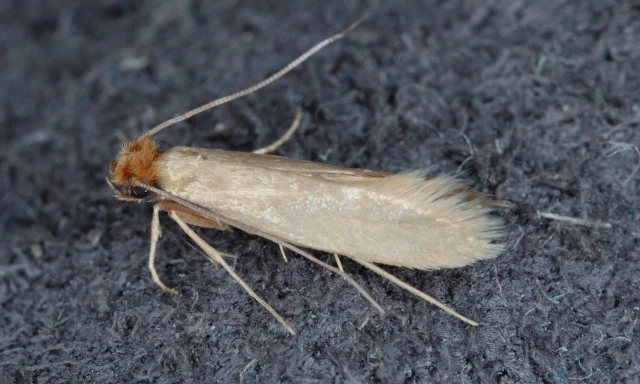
The true flies are insects of the order Diptera (meaning: two winged) and include common pests like houseflies, lesser house flies, blowflies, cluster flies, clothes moths, midges, crane flies, fruit flies and other pest species that enter our homes and workplaces.

Flies are vectors of a large number of diseases including gastroenteritis, dysentery, typhoid, polio, salmonella and tuberculosis. Others, such as sandflies, are a direct irritant, biting humans and sometimes causing painful reactions.

Numerous bristles on the flies' legs pick up and distribute germ laden particles wherever they go from rotten animal waste to your sandwich.

In warmer climates, breeding continues throughout the year. Eggs are laid in moist decaying animal or vegetable matter and animal waste. The maggots (larvae) of flies feed voraciously on the food matter before pupating and emerging as adult flies.

House Flies

Two groups of flies are grouped under the term house fly (or housefly) these are of the Musca and Fannia genus. Fannia are lesser house flies and are a little smaller that Musca house flies. Lesser house flies are often the type that are seen flying in angular patterns around the centre of a room. They can keep flying all day and will only land at night. This makes them a little more difficult to control using surface treatment alone.

Blow Flies

Blue bottle and green bottle flies have shinny metallic looking bodies and are larger than houseflies and are associated with rotten meat where their eggs are laid and the larvae (maggots) feed before pupating and emerging as adult flies. An infestation of blow flies suggests a dead animal carcase in the vicinity e.g. a dead rat in the roof space. Check for possible sources and carry out treatment as suggested above. More information.

Fruit Flies

Because of the particular habits of fruit flies they are dealt with in a separate page.

Cluster Flies

Because of the particular habits of cluster flies they are dealt with in a separate page.

Generalised Life cycle

The complete metamorphosis cycle can be as short as 7 - 9 days in ideal conditions.

Eggs to Maggots 8 - 24 hours
Maggots to pupa 4 - 5 days
Pupa to Adult fly 2 - 7 days


Did you know?

The flying insects encountered in urban and industrial premises can be of many types, but it is generally accepted that those which are regarded as pests are those which spread disease through contamination, cause physical damage and general nuisance.

The insects most associated with the spread of disease in domestic, commercial and industrial premises are the true flies. There are many thousands of species of fly, however, relatively few interact with humans. Those that do are among the most destructive of pest species, spreading disease to man and domesticated animals, as well as contaminating food.

Adult flies fly; it is this that makes their status as pests so important, allowing them mobility to visit many diverse habitats. By nature, many flies breed and feed in areas of unsanitary conditions, with larvae feeding on decaying organic matter. The adult female uses complex sensory systems to choose suitable areas of rotting vegetation and decaying animal matter in which to lay her eggs and for the larval stages to develop into pupae. The adults emerge from the pupae in these unhygienic sites and, as they do, they become contaminated with disease causing organisms. They may fly to sensitive food preparation, processing and consumption areas, seeking feeding sites for themselves as adults.

The likelihood of contamination of human food with pathogens has been demonstrated over the years by a number of experiments. In these, disease-causing agents have been found to survive on outside body surfaces of flies. They also exist in the fly gut and blood system.

Flies are fluid feeders and, although they feed on solids, they need to liquidise the food before they can suck it up. They do this by producing large quantities of saliva from their salivary glands. This is then poured onto the food via the salivary canal of the mouth parts. The flies also frequently vomit some fore gut contents onto the food while feeding. In addition, during the feeding process, flies frequently defecate. This in turn can spread pathogens from the hind gut of the fly onto food and food preparation areas.

If the food on which the flies have been feeding and defecating is prepared for human consumption, human disease and suffering is frequently the result. Food poisoning outbreaks can occur from a minute dose of pathogens and it is common that flying insects spread disease.


  • Bug, Insect, Spider?
  • Mixing and Diluting Spray Concentrates
  • No Bugs
  • Have a Bug Free Summer with NO Bugs Super
  • Now is the Time to Stop Flies for the Season
  • Other Risks from Bugs
  • Integrated Pest Management
  • Fair Weather for Pests

Tips

The lesser house fly is often found flying in an angular flight path around the centre of a room. Annoyingly it may do this all day without landing on a surface. It is regarding the room as a shaded, draftless area below a tree. Sometimes changing the lighting and air currents in a room will stop these annoying pests staying in the room.

Gallery

Lake fly Blow fly Cluster flies Fruit fly House fly feeding on uncovered bread Lesser house fly Maggots are the larvae of flies. Blow fly maggots will feed on meat. House fly larvae feed on rotting vegetable matter. House Fly

About Kiwicare

We are Kiwis providing expert local solutions that keep your place pest free and your garden healthy.

Garden

Garden home Garden Problem Solver Products Pests Diseases Weeds Garden Health Organics

Company

About News Products Vacancies Useful Links Contact
Proudly made in NZ

© 2011 Kiwicare